
A new roof usually leaks because of an installation detail, not bad shingles. Common causes are old flashing reused instead of replaced, missing kickout or step flashing, pipe boots installed wrong, nails placed too high, and valleys without proper underlayment. Call the installer first, since most new roofs carry a workmanship warranty, and document everything with photos.
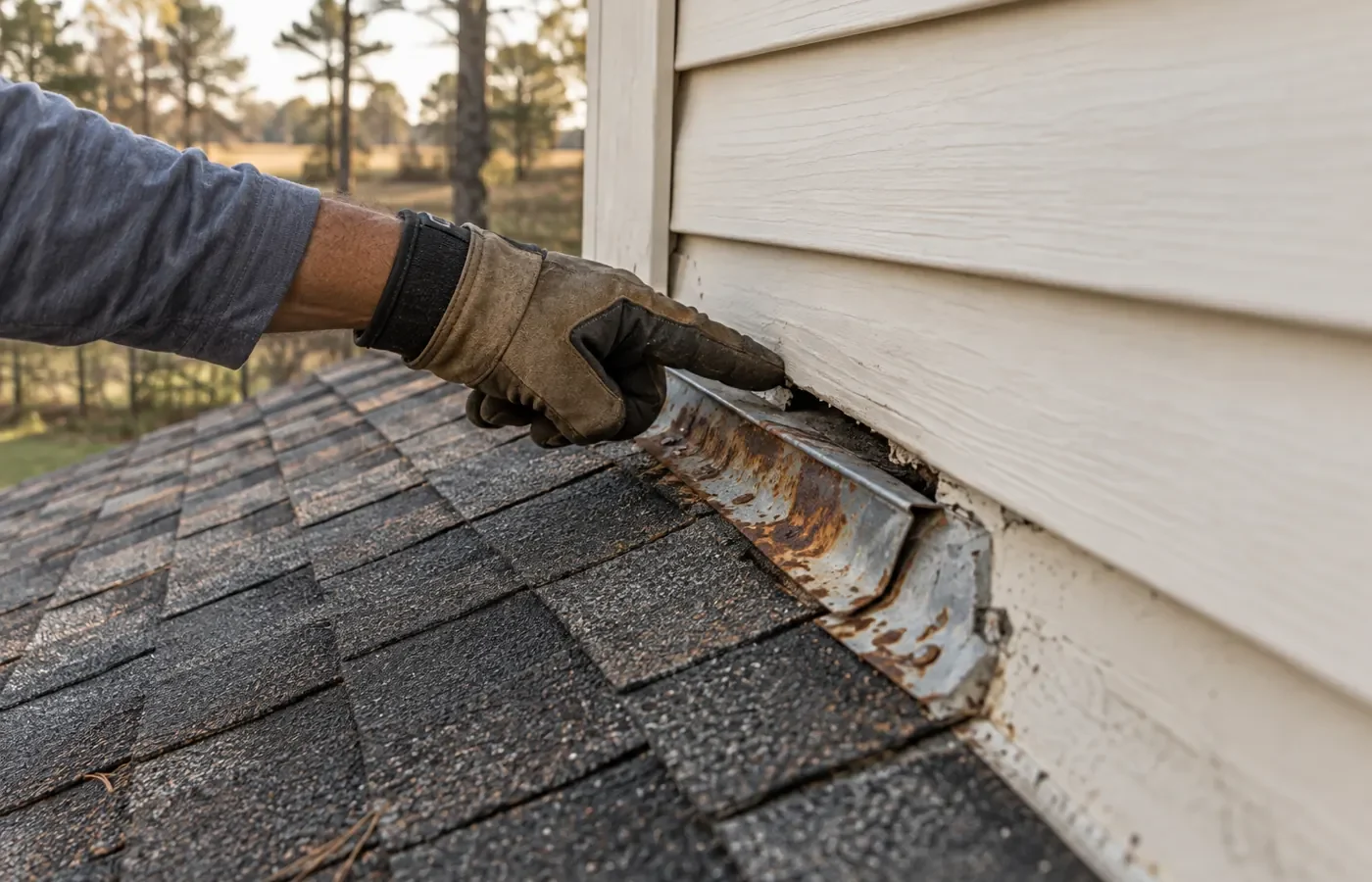
Common reasons new roofs leak
- Old step or chimney flashing reused and tarred over
- No kickout flashing at the bottom of a roof-to-wall joint
- Pipe boots set on top of the shingles instead of woven in
- Nails placed above the nailing line, so the shingle above does not cover them
- Valleys cut too close or missing waterproof underlayment
- Shingles on a slope too low for them
- Ridge vent slot cut too wide or missing end plugs
What to do first
- Catch the water and protect the room.
- Take dated photos of the stain and any water inside.
- Find your contract and warranty paperwork.
- Call the original installer in writing and ask them to inspect it.
- Keep records of every call and visit.
Workmanship versus manufacturer coverage
Most shingle makers cover defects in the shingles themselves, and most installers cover their workmanship for a set time. New roof leaks are almost always workmanship. If the installer is out of business or will not respond, a different roofer can find and fix the problem, and you will have photos to show what went wrong.
Is it a leak or something new in the attic?
New roofs sometimes change attic ventilation. If a new ridge vent was added or soffit vents were covered, condensation can appear for the first time and look like a leak. See roof leak or condensation.
After a big storm
A new roof can still be damaged by a severe storm. In Pine Bluff that means hail and wind, like the 3 April 2025 hail in Pine Bluff and Watson Chapel. That is a storm claim, not a workmanship problem. See storm damage roof repair.
We trace new-roof leaks the same way as any other. See roof leak detection.
How soon after a new roof can it leak?
Installation mistakes often show up in the first heavy or windy rain, usually within the first few months. Some take longer: a pipe boot set wrong may hold for a while, and a nail in the wrong place may not leak until the shingle above it moves. Any leak in the first couple of years on a new roof is worth reporting to the installer right away.
Could it be a leak from the old roof?
Sometimes a stain from the old roof was never painted over, and it looks like a new leak. Mark the edge of the stain with a pencil and check it after the next rain. If it grows, it is active. If not, it may be old damage that just needs stain-block primer and paint.
What to ask the installer
Ask whether they replaced or reused the flashing, how they installed the pipe boots and valleys, and whether ice and water shield went in the valleys. Ask for photos from the job. Good installers take them. See repair or replace a leaking roof.
Is it normal for a new roof to leak?
No. A properly installed roof should not leak. A leak points to an installation detail or storm damage.
Who pays for a leak on a new roof?
Usually the installer, under their workmanship coverage, if the cause is installation.
Can reused flashing cause leaks?
Yes. Old flashing covered with tar is one of the most common new-roof leak causes.
What if the roofer will not come back?
Document everything in writing, then have another roofer find and fix the issue with photos.