When your roof starts leaking, keep people away from wet electrical fixtures and shut off power to that area, catch the water with buckets and towels, drain any bulging ceiling through a small hole, move valuables, and take dated photos. Then call a roofer to tarp or repair it. Do not climb on a wet roof.
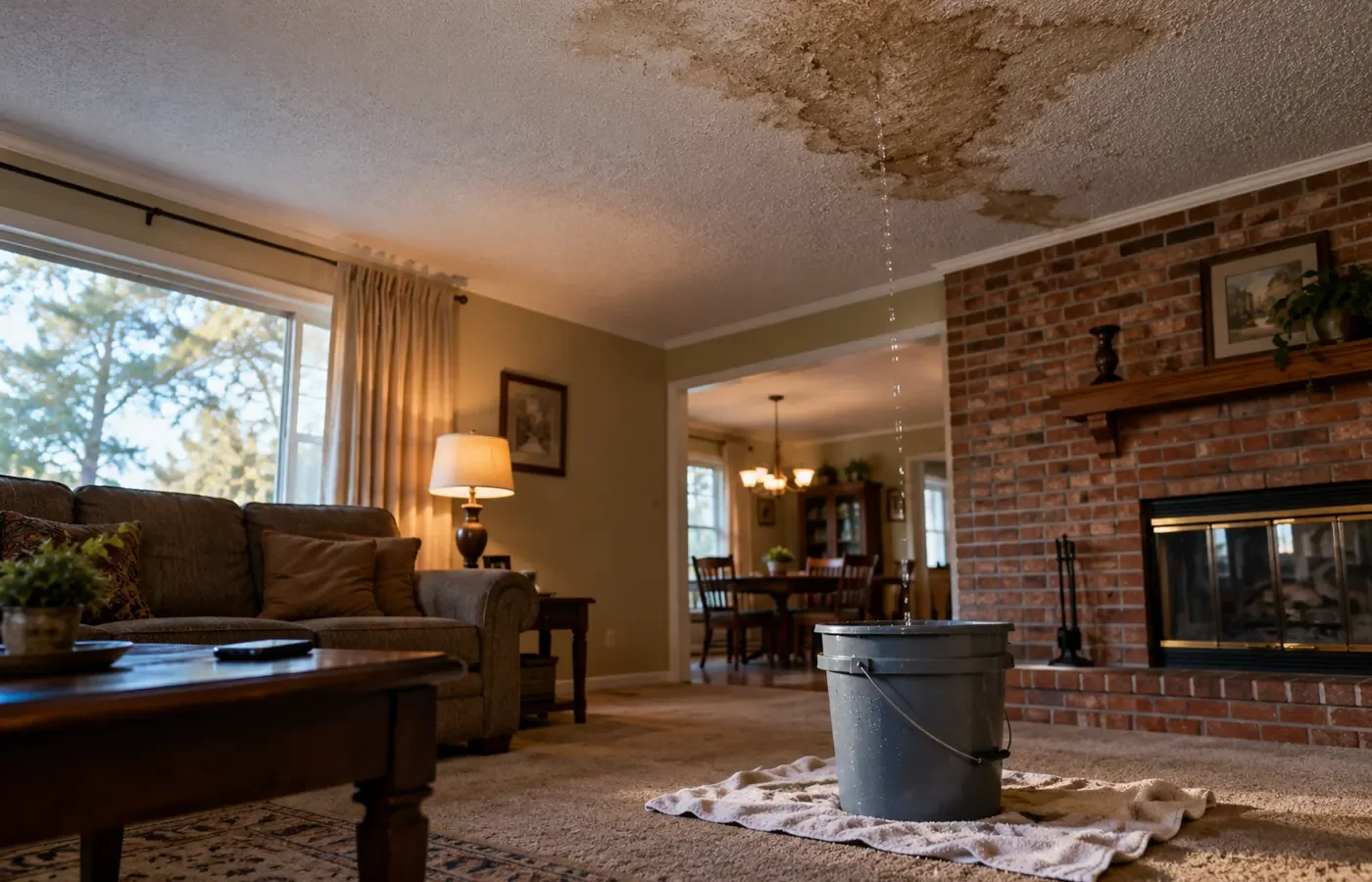
The eight steps, in order
- Stay safe. If water is near a light, fan, outlet or the panel, turn off that breaker. Keep kids and pets out of the room.
- Catch the water. Buckets, pots and towels. Put a board or towel in the bucket to stop splashing.
- Protect the floor. A plastic tarp, shower curtain or trash bags under the drip.
- Drain a bulge. If the ceiling bulges, poke a small hole at the lowest point over a bucket. Controlled draining is safer than letting it burst.
- Move valuables. Electronics, papers, photos, rugs and furniture.
- Document it. Dated photos and a short video of the ceiling, floor and anything damaged.
- Check the attic if it is safe. Put a bucket under the drip there too, and look for where the water comes in.
- Call a roofer. Describe where the water is, how fast it comes in and when it started.
What not to do
- Do not climb onto a wet or storm-damaged roof. Falls from roofs cause serious injuries.
- Do not use electrical items standing in water.
- Do not tear out wet drywall or insulation before taking photos, if you may file a claim.
- Do not sign a contract with someone who shows up at the door right after a storm without checking them. See storm chasers in Arkansas.
After the water stops
Start drying right away. Fans, a dehumidifier and open windows in dry weather all help. The EPA advises drying wet materials within 24 to 48 hours to prevent mold. Pull wet rugs up and prop them to dry. Wet insulation above the ceiling holds water and should usually be replaced. See mold after a roof leak.
Should I call my insurance company first?
You can call both, but stopping the damage comes first. Most policies expect you to take reasonable steps to prevent more damage, like a tarp. Keep the receipt for the tarp and your photos. Whether it is worth filing depends on the cause and your deductible. See should I file a claim for a roof leak.
What information helps the roofer most?
Where the stain or drip is in the house, which side of the house, how long it has leaked, whether it only leaks in heavy or windy rain, the roof age if you know it, and photos of the ceiling and the roof above from the ground. With that, we can often tell what the likely cause is before we arrive.
How fast can you come?
Call before 7 pm and we aim to respond the same day in Pine Bluff and the areas around it. See emergency roof leak repair.
Should I poke a hole in a bulging ceiling?
If it is filled with water, yes. A small hole over a bucket drains it slowly and lowers the risk of the ceiling giving way.
Can I put a tarp on my roof myself?
Only if the roof is dry, low and you are comfortable on a ladder. In rain or wind, wait for a roofer.
How long do I have before mold starts?
Mold can start within 24 to 48 hours on wet materials, so dry things quickly.
Do I need to move out during a roof leak?
Rarely. Only if the ceiling is unsafe, power is off for large parts of the house, or there is major storm damage.