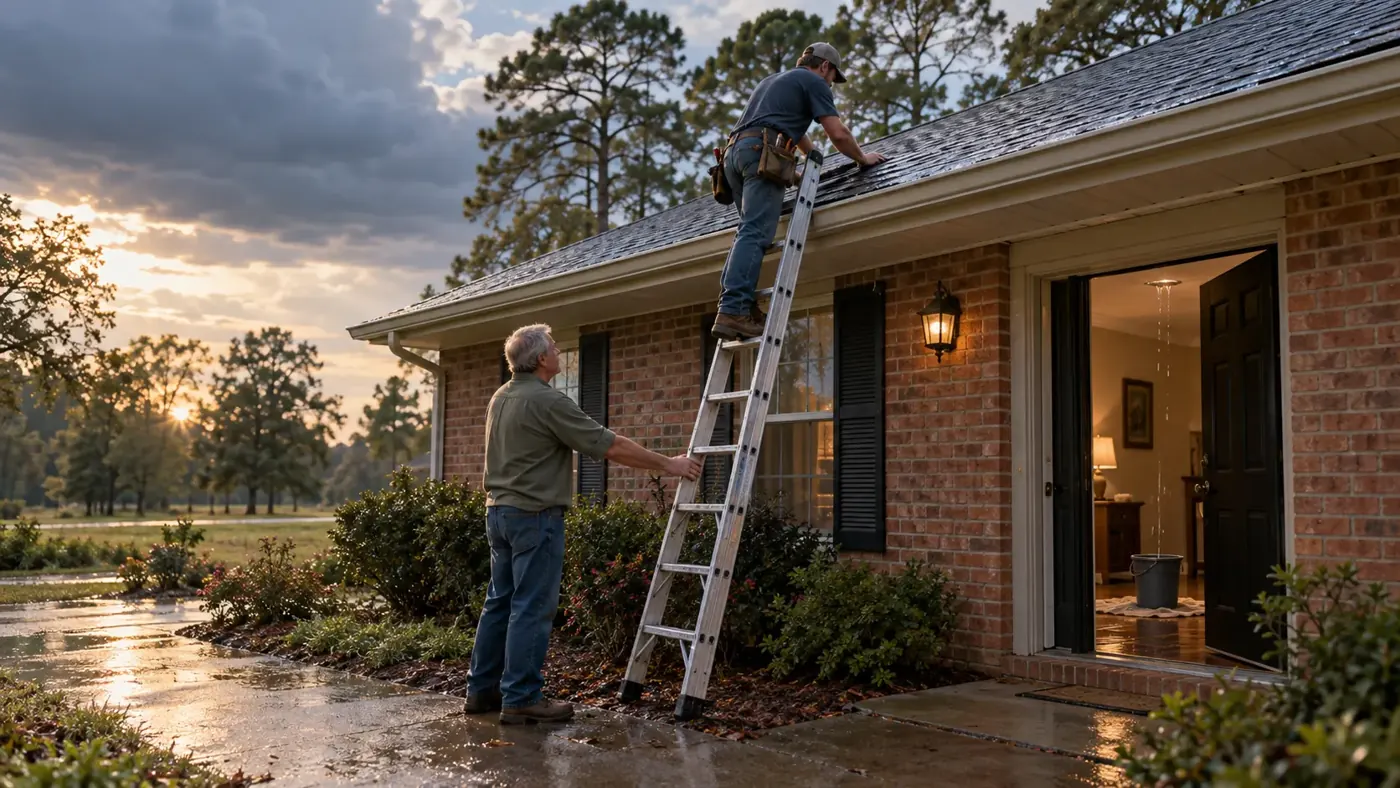
A proper roof repair should not be done in the rain. Shingle seal strips, underlayment and roofing sealants do not bond to wet surfaces, and a wet roof is slippery and dangerous. What a roofer can do in light rain is put on a tarp to stop the water. The permanent repair follows once the roof is dry. Nobody should work on a roof during lightning or strong wind.
Why repairs wait for dry weather
- Adhesion: The seal strip on a shingle needs a dry, warm surface to bond. Sealants and roof cement do not stick to wet shingles or metal.
- Trapped moisture: Closing up wet decking under new shingles traps water, which leads to rot and mold.
- Safety: Wet shingles and metal are slippery. Lightning and wind make roof work dangerous.
- Finding the leak: Water on the surface can hide where it is really getting in.
What can be done while it rains
- Put a tarp over the damaged area, if it is safe to get on the roof
- Check the attic and follow the water trail
- Catch water and protect the rooms inside
- Photograph and note where the water appears for later
See emergency roof tarping and how long a tarp can stay on a roof.
Is rain ever useful?
Yes, for finding the leak. Going into the attic during rain is the best way to see exactly where water enters. That makes the repair faster once the weather clears. See how to find a roof leak from the attic.
What about rain on a small repair already done?
If a shingle repair was made on a dry day and rain comes a few hours later, that is usually fine. The nails and layering keep water out while the seal strips finish bonding in the next warm, sunny weather. Sealant needs time to cure, so we avoid using it just before rain.
Pine Bluff weather and scheduling
Spring is our wettest season, with more than 5 inches of rain a month on average from March through May, often in quick, heavy storms. Many repairs happen in the dry windows between them. That is why we tarp first when rain is still coming, then come back for the proper repair on the first dry day, so you are not waiting on one long dry spell.
Can I sit it out without a tarp?
If the leak is a slow drip and the next few days are dry, you can wait for the repair without a tarp. If more storms are coming, a tarp keeps each new rain from soaking the same spot. Watch the forecast and decide with your roofer. See emergency roof leak repair.
How dry does the roof need to be?
The surface should be dry and the decking under any opened area should not be wet. On a sunny day after rain, a roof often dries in a few hours. Shaded roofs and north sides can take longer, especially under the tall pines common around Pine Bluff.
Will a roofer come out in the rain?
Many will come to tarp and inspect in light rain. The permanent repair waits for dry weather.
Does roof sealant work on wet surfaces?
Most do not bond well to wet surfaces. A few products are made for wet use, but they are temporary fixes.
Can new shingles go on a wet roof?
They should not. Moisture trapped under them can rot the decking.
Is it safe to tarp in a storm?
Not during lightning or strong wind. Wait for a break in the weather.