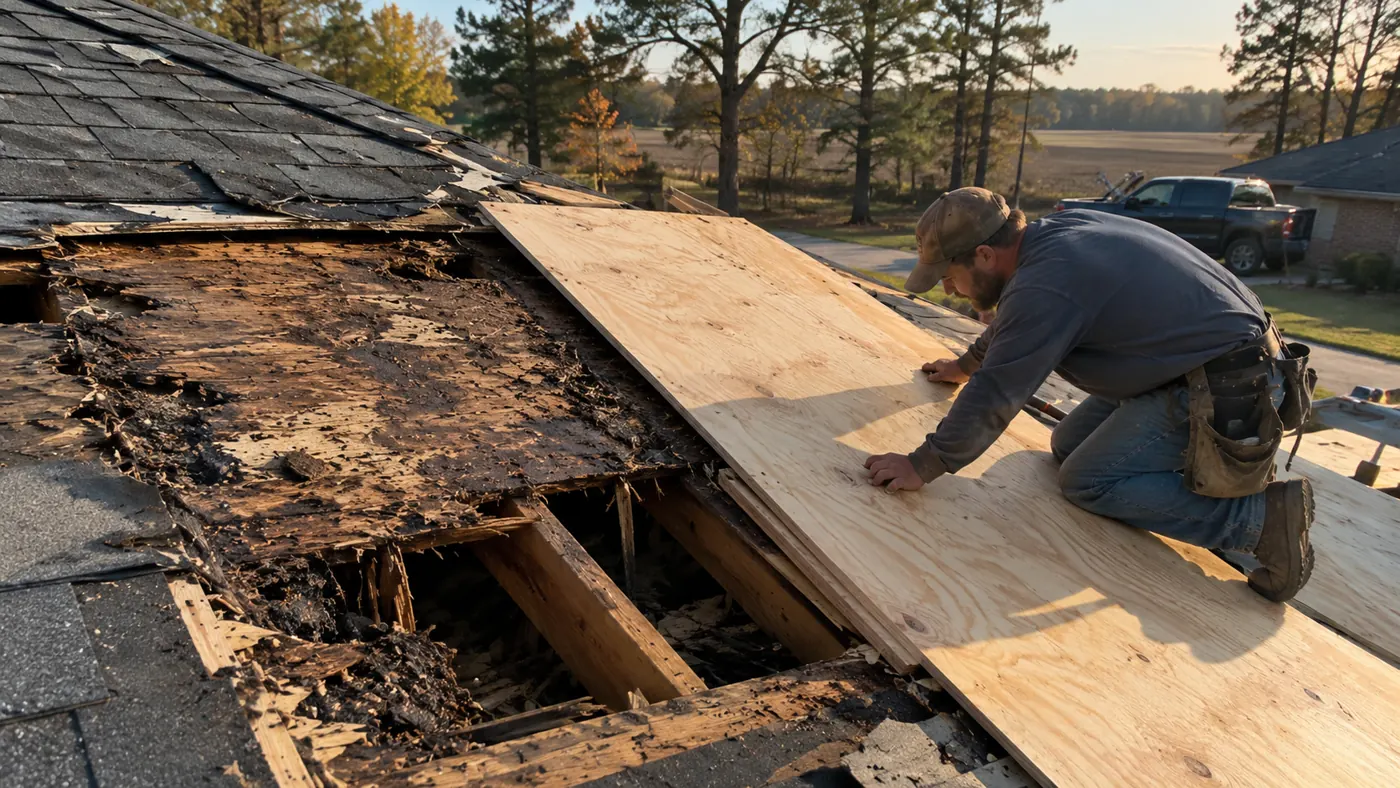
Roof decking is the plywood or board layer that the shingles are nailed to. When a leak goes unnoticed for months, that wood gets soft, delaminates or rots, and the roof starts to sag. We open the damaged area, show you photos, replace only the bad sections with new decking, fix the leak that caused it, and shingle back over it.
Decking damage is the price of a slow leak. A cracked pipe boot or a bad valley can drip into the wood for a long time before anything shows on your ceiling. By the time you see a stain, the plywood above it may be soft. That is common in Pine Bluff, where the median home was built in 1972 and many roofs have had small leaks for years.
Signs of damaged decking
- A dip or sag in the roof line you can see from the street
- Spongy or soft spots when walked on (only a roofer should walk on it)
- Dark, stained or crumbling wood seen from the attic
- Daylight through the roof boards in the attic
- Mold or a musty smell in the attic
- Nails that will not hold in the wood
What causes decking rot
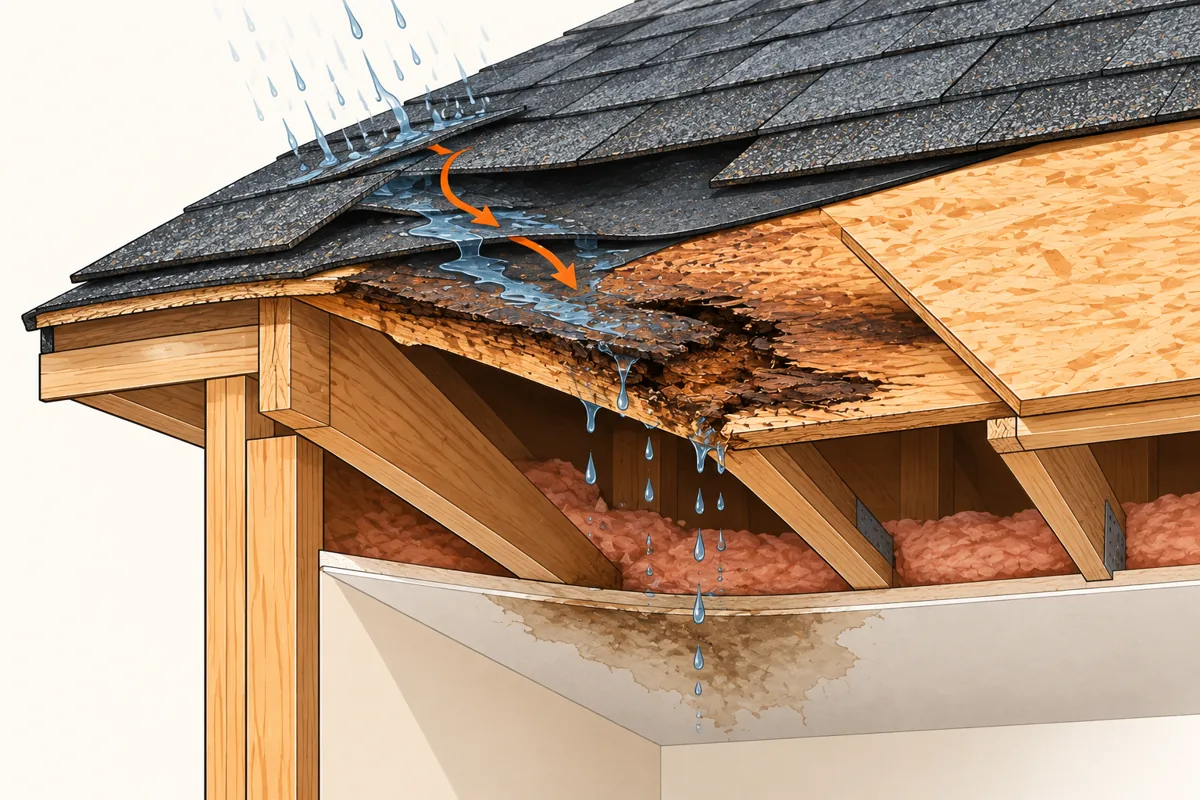
Wood only rots when it stays wet. On a roof that means a leak that keeps coming back, like a failed valley, pipe boot or flashing, or trapped moisture from poor attic ventilation. In a humid place like Pine Bluff, with average humidity near 69%, damp decking dries slowly.
Older homes may have plank decking (1×6 or 1×8 boards) instead of plywood. Planks can be fine, but the gaps between them and knots in the boards can make repairs trickier. We match or replace with the right thickness so the new section lies flat with the old.
How we repair decking
Find the leak
Before replacing wood, we find and fix what soaked it. New wood under an old leak rots too.
Open and photograph
We remove shingles over the damaged area and send you photos of the wood.
Price it
You approve the number of sheets or boards before we cut anything out.
Replace and reroof
New decking, new underlayment, shingles back on, and after photos.
We cut back to solid wood, fasten new sheets to the rafters, and check the rafters themselves for rot. Rotted rafters are less common but more serious, and we show you before touching them.
Text Jacob a photo from the street and from the attic if you can. We find the leak first and price the repair before any work.
Roof decking repair cost in Pine Bluff
| Repair | Typical Central Arkansas range |
|---|---|
| Decking replaced as part of a leak repair | Priced per sheet, shown in photos first |
| Major repair with structural work | $1,200 to $3,500 or more |
| Rotted rafters | Quoted on site after inspection |
Ranges based on published Central Arkansas roofing cost guides (2025 and 2026). They are not quotes. Your written price comes after we look at your roof, and you approve it before any work starts.
Can decking damage be found before a repair?
Partly. From the attic we can see stains, dark wood and daylight, and we can press on suspect areas from below. The full extent shows up when the shingles come off. That is why we price decking per sheet and send photos before replacing anything, so there are no surprises on the bill.
Decking and a new roof
If you are replacing your roof, all the decking gets inspected as the old shingles come off, and bad sheets are replaced. If damage is widespread, it can be a sign that a full roof replacement makes more sense than patching. We will show you photos either way.
How to catch decking damage early
Once or twice a year, go into the attic on a dry, sunny afternoon with a strong flashlight. Look at the underside of the roof around every pipe, vent, chimney and valley. Dark rings, white fuzzy spots, stains running down rafters or rusty nail tips all mean moisture. Press gently on stained wood with a screwdriver handle. If it gives, the decking is soft. Also check that insulation is not packed into the eaves, blocking airflow from the soffit vents. Poor airflow keeps decking damp even without a leak. Catching a stain before the wood turns soft keeps a leak repair from becoming a decking repair. If you are not sure what you are looking at, send us photos and we will tell you.
We replace decking on homes of every age, but it is most common on the older roofs in East Pine Bluff, where about nine in ten homes were built before 1980, and on the historic homes downtown with original plank decking.
Roof decking FAQ
Can you replace decking without replacing the whole roof?
Yes. We remove shingles over the damaged area only, replace the wood, and shingle it back in.
Is a sagging roof dangerous?
A slight sag usually means soft decking, not a collapse risk. A deep or growing sag, or cracked rafters, should be checked soon. Stay out of that part of the attic until it is.
Does rotted decking cause mold?
Wet wood and insulation can grow mold. See how fast mold grows after a roof leak.
What thickness decking do you use?
We match the existing decking so the new section lies flat, typically 7/16 inch OSB or 1/2 inch plywood on houses.
Will insurance cover rotted decking?
Rot from a long, slow leak is usually excluded. Damage from a sudden event like a fallen tree may be covered.
Back to roof leak repair in Pine Bluff.