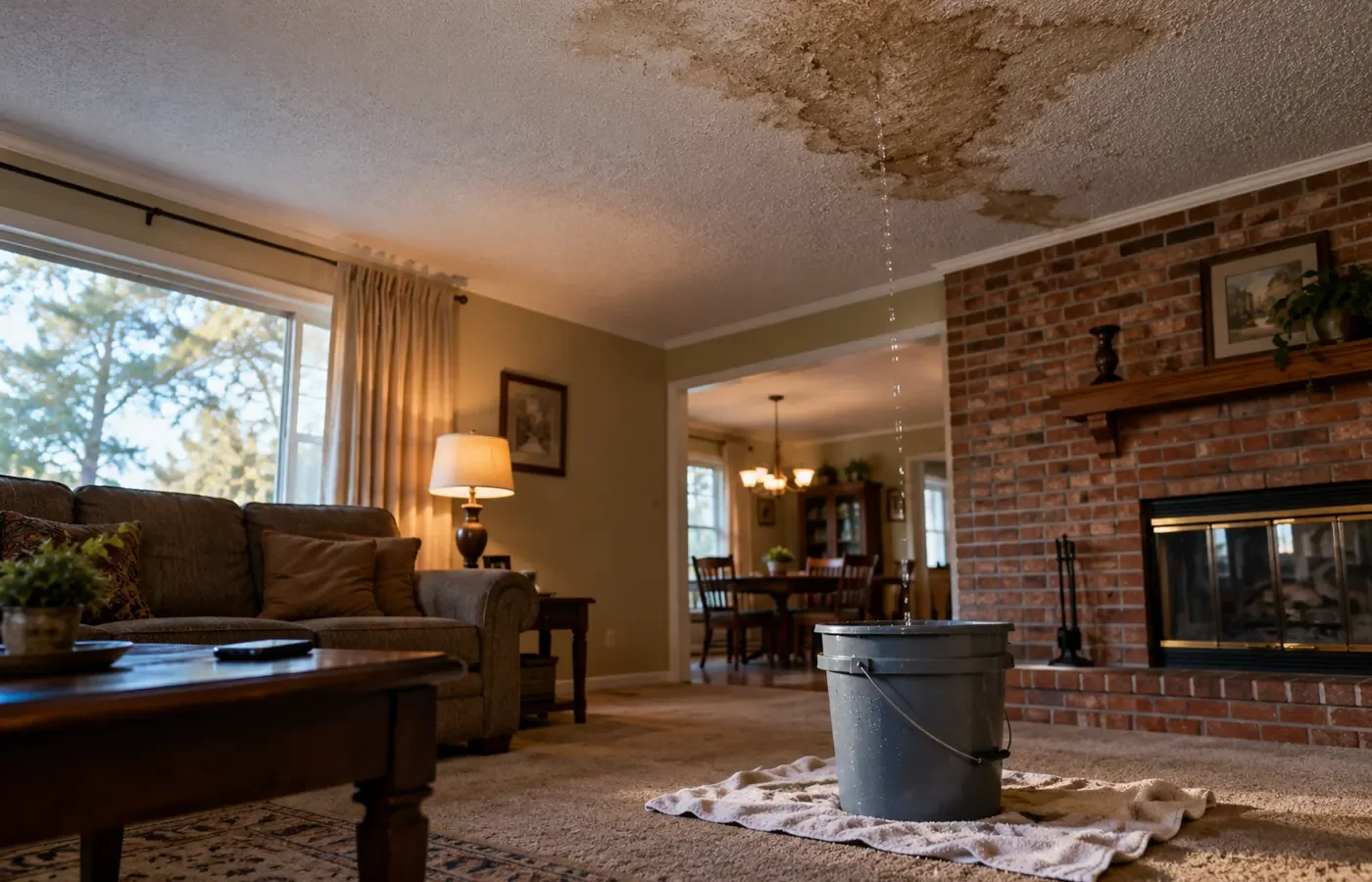
A water stain on the ceiling when the roof looks fine from the ground usually means a small leak you cannot see from below, like a cracked pipe boot, a gap in flashing or a nail that backed out. Water can also travel along rafters before it drips, so the entry point is often feet away from the stain. Condensation and plumbing leaks can leave the same kind of stain.
Why the roof can look fine
Most leaks come from small parts: a split in a rubber pipe boot, a rusted piece of step flashing under the shingles, or a nail hole. None of those are visible from the yard. Shingles can look perfect while the metal and rubber around them have failed. On the median Pine Bluff home, built in 1972, those parts are often much older than the shingles.
How water travels
Water that gets through the roof deck runs along the underside of the decking, down rafters or along pipes until it reaches a low point, then drips onto the ceiling. That is why the stain can be in the middle of a room with nothing above it on the roof.
Other causes of ceiling stains
| Cause | Clue |
|---|---|
| Attic condensation | Shows up on cool mornings, many small spots |
| AC drain pan overflow | Summer, near the air handler |
| Plumbing | Under a bathroom, any weather |
| Old stain from a past leak | Does not grow, dry to the touch |
How to check
- Touch the stain. Damp means active. Dry and not growing may be old.
- Mark its edge with a pencil and check after the next rain.
- Look in the attic above it and follow any trail uphill.
- Look at the roof from the ground with binoculars or a zoomed phone camera around pipes and chimneys.
See how to find a roof leak from the attic.
Fixing the stain itself
Once the leak is fixed and the drywall is dry, a stain-blocking primer stops it from bleeding through new paint. Soft or sagging drywall needs replacing. See roof water damage repair.
What color is the stain?
Brown or yellow rings are the classic sign of water that soaked in and dried, leaving minerals and tannins from the wood behind. Several rings inside each other mean it has leaked, dried and leaked again. A dark or gray spot that feels damp is active. Black or green fuzzy spots point to mold, which means water has been sitting there for a while.
Is a ceiling stain covered by insurance?
Most policies cover sudden damage, like from a storm or a falling limb, and not slow leaks from worn parts. The ceiling repair itself may be covered even when the roof part is not. Take dated photos and read your policy. See does insurance cover roof leaks.
When a small stain becomes urgent
If the drywall sags, feels soft, or water is dripping near a light fixture, treat it as urgent. Turn off power to that fixture, move things out of the way, and poke a small hole in a sagging bulge over a bucket to let the water out. See can a leaking ceiling collapse.
Can a roof leak without visible damage?
Yes. Most leaks are at pipe boots, flashing or nails that you cannot see from the ground.
Is an old dry ceiling stain a problem?
If it does not grow after rain, it may be from a past leak. Mark it and watch it.
Why is the stain in the middle of the room?
Water often runs along rafters or decking before it drips.
Do I need a roofer for a small stain?
If it grows after rain, yes. A small stain today is often a small repair.
More help: roof leak detection.