
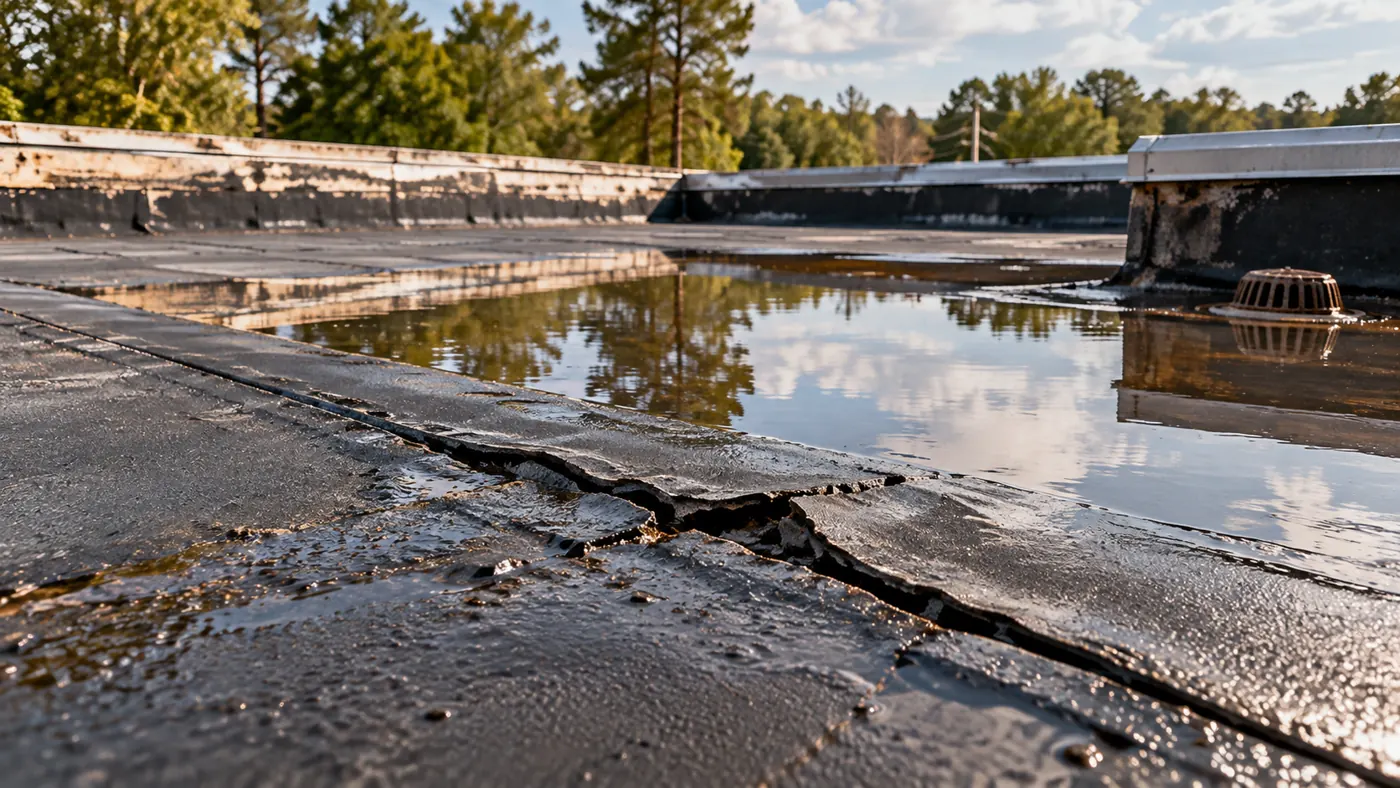
Yes. Water that is still standing on a flat roof 48 hours after rain is called ponding, and it is a problem. It wears out the roof surface faster, soaks into any seam or crack, grows algae, collects dirt and adds weight. Water that drains within a day or two is normal. Ponding is caused by clogged drains, sagging decking, poor slope or low spots from settling.
How much weight is ponding water?
Water weighs about 5.2 pounds per square foot per inch of depth. A 10 by 10 foot pond just two inches deep adds more than 1,000 pounds to the roof. As the roof sags under that weight, the pond gets deeper and heavier.
Common causes
- Drains, scuppers or gutters clogged with leaves
- Sagging or rotted decking under the roof
- Roof built with too little slope
- Low spots from settled insulation or framing
- HVAC units or roof curbs that block water flow
- New layers built up around drains
What ponding does over time
- Speeds up breakdown of the membrane surface
- Pushes water into any small seam gap or puncture
- Grows algae and plants that trap more water
- Rots the decking under a leak
- Can void some manufacturer coverage on the membrane
How ponding is fixed
| Cause | Fix |
|---|---|
| Clogged drains | Clean drains, scuppers and gutters, add strainers |
| Low spot | Build it up with tapered insulation or fill, then cover |
| Poor overall slope | Tapered insulation system during a reroof |
| Rotted decking | Replace the soft decking, then patch |
| Too few drains | Add a drain or scupper |
See flat roof leak repair and commercial roof leak repair.
Why ponding is common in Pine Bluff
Downtown and older commercial buildings in Pine Bluff often have flat roofs behind brick parapets that drain to scuppers or internal drains. Leaves from nearby trees and debris after storms clog those quickly. Heavy spring rains, with more than 5 inches a month on average from March through May, then sit on the roof. Home porches and additions with nearly flat roofs have the same problem on a smaller scale. See porch roof leak repair.
What you can do
- Check drains and scuppers every spring and fall, and after storms.
- Note where water stands and how long it lasts.
- Take photos a day and two days after rain.
- Keep people off soft or sagging areas.
How to measure ponding yourself
After a heavy rain, note the time and take photos of where water stands. Check again at 24 and 48 hours. If the same areas still hold water after two days, you have ponding. Mark the edges with chalk on a dry day so you can see whether the ponds grow over time. A growing pond often means the decking underneath is sagging, which is worth checking before the next big storm. Share the photos with your roofer, since they show the problem better than a dry-day visit.
When ponding is urgent
If the roof visibly sags, the ceiling below bulges or cracks, or water sits more than a few inches deep, treat it as urgent. Clear drains if you can do it safely and call for help. See can a leaking ceiling collapse.
How long can water sit on a flat roof?
It should drain within about 48 hours after rain. Longer than that is ponding.
Is some water on a flat roof normal?
A few small puddles that dry within a day or two are normal.
Can ponding cause a roof to collapse?
In extreme cases, yes. Deep, spreading ponds on a sagging roof are a warning sign.
Does coating fix ponding?
Coatings do not fix slope. Some are made to resist ponding, but the drainage problem still needs fixing.