Yes. When wind lifts a shingle, it breaks the seal strip that holds it down and often creases the shingle along a line near the nails. A creased or unsealed shingle can leak in wind-driven rain and blow off in the next storm, even if it lies flat again. Lifted shingles are resealed if they are undamaged, or replaced if they are creased or cracked.
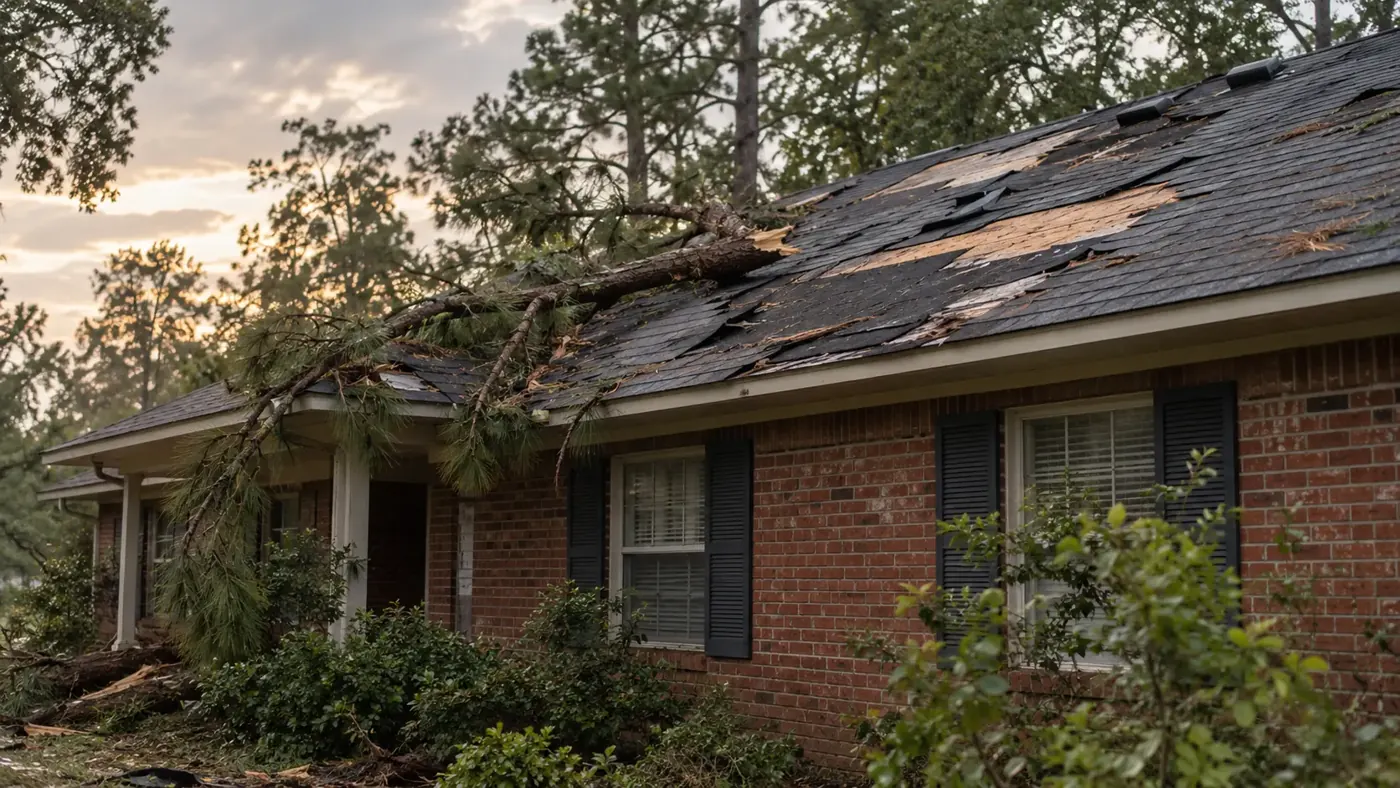
How to spot wind-lifted shingles
- Shingle tabs that sit up or flap in a breeze
- A straight line or crease across a shingle
- Shingles that look out of line with their row
- Missing shingles, or pieces in the yard
- Exposed nails or the black underlayment showing
- Damage along edges, corners and the ridge
Look from the ground with binoculars or a phone zoom. Edges, corners and the ridge get the most wind and fail first.
Why creased shingles matter
A crease weakens the shingle mat. Over the next months, the shingle can crack along the crease, and water gets in. Creased shingles also lose their hold, so the next strong gust may tear them off. Many insurers count creased shingles as wind damage when they come from a storm.
Wind around Pine Bluff
NOAA lists 122 thunderstorm wind reports in Jefferson County from 2005 to 2026. A 74 mph gust was recorded at Grider Field on 12 January 2024. Remnants of Hurricane Beryl brought EF0 and EF1 tornadoes to the Warbritton and Faith areas on 8 July 2024, and remnants of Isaac in 2012 put trees on homes and blew a business roof off. FEMA’s National Risk Index rates strong wind risk for the county as relatively high. See the Pine Bluff Roof Damage Report.
What wind can shingles handle?
Many standard shingles are rated for about 60 to 110 mph winds when installed to the maker’s instructions, and some are rated higher. Older shingles, shingles installed with too few nails or nails in the wrong place, and shingles that never sealed in cold weather can fail at much lower speeds.
How they are repaired
- Lifted but not creased: Clean under the tab and reseal it with roofing sealant.
- Creased or cracked: Replace the shingle, nailing below the seal strip.
- Missing: Replace with matching shingles, check the underlayment and nail pattern.
- Many lifted shingles: A wider pattern may point to installation problems or storm damage worth documenting for a claim.
See shingle repair and storm damage roof repair.
What to do after a windstorm
- Walk around the house and look for pieces of shingle or trim in the yard.
- Look at edges, corners and the ridge from the ground.
- Photograph anything missing or out of place, with the date.
- Check the attic and ceilings after the next rain.
- Have a roofer check up close if you see anything.
Shingles that never sealed
Shingles installed in cold weather sometimes never seal until the first warm spell. If a windstorm comes before then, even a new roof can lose tabs. Shingles under heavy shade may also seal poorly. A roofer can hand-seal these with dabs of roofing sealant under each tab.
Does a lifted ridge cap matter?
Yes. Ridge caps sit at the highest point and take the most wind. A lifted or missing cap lets rain in along the peak. See ridge cap repair.
Can lifted shingles be glued back down?
If they are not creased or cracked, yes, with roofing sealant under the tab.
Will insurance pay for wind-lifted shingles?
Often, if a storm caused it. Photos and the storm date help.
Why did only some of my shingles lift?
Edges, corners and ridges take the most wind. Poor nailing or old shingles fail first.
How do I know if a shingle is creased?
Look for a straight line across it, often near the nails, where it bent back.