The main signs of hail damage on a shingle roof are round dark spots where granules were knocked off, soft bruises that feel like a bruised apple, cracked or broken shingles, and heavy granule piles at the downspouts. From the ground, dents in gutters, downspouts, vents and the AC unit are the easiest clues that hail was big enough to damage the roof.
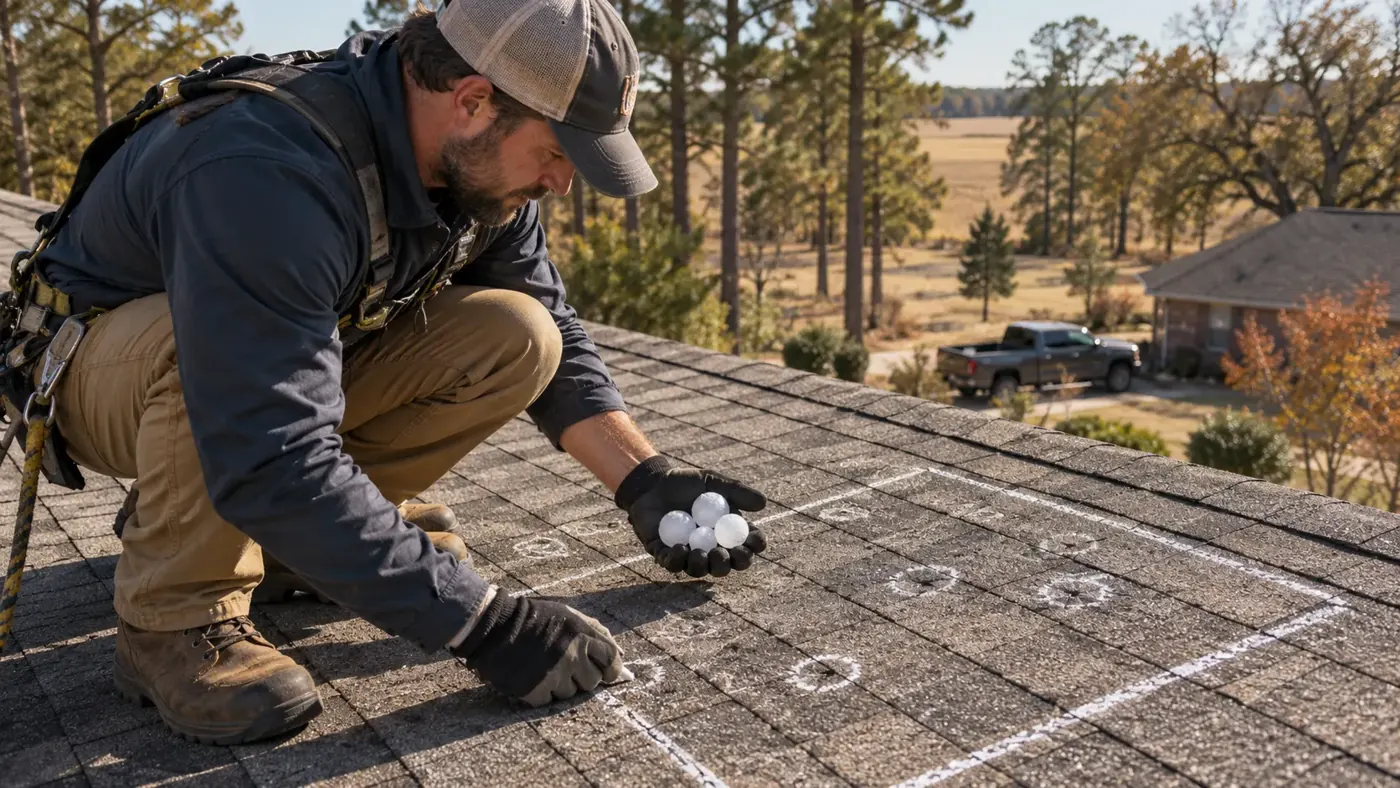
What to check from the ground
- Dents or dings on gutters, downspouts and metal vents
- Dents on the AC unit, mailbox or car from the same storm
- Granules piled at the bottom of downspouts
- Cracked or split window screens and siding
- Pieces of shingle in the yard
- Shiny spots on the roof where granules are gone
Do not climb on the roof after a storm. Use binoculars or zoom in with your phone, and take dated photos.
What hail damage looks like up close
| Roof type | What hail damage looks like |
|---|---|
| Asphalt shingles | Round dark marks with granules missing, soft bruises, cracks, exposed mat |
| Metal | Round dents in panels, trim and ridge, sometimes cracked paint |
| Flat roof | Punctures, cracked membrane, dents in insulation below |
| Skylights | Cracked domes or chipped glass |
| Wood shakes | Fresh splits with sharp edges |
Hail damage versus normal wear
Normal aging wears granules evenly across a roof, most on the sunny slopes. Blistering leaves small, raised or popped spots. Hail marks are random, round and appear on all slopes that faced the storm, with the most on the side the storm came from. Hail damage is also fresh: the exposed spots look darker and newer than the rest. See what size hail damages a roof.
Why hail damage matters even without a leak
A bruised shingle may not leak today. But the broken mat underneath lets water soak in, and the lost granules leave the asphalt exposed to sun. Hail-hit roofs often start leaking months or a year or two later, when the damage has worked through. That is why a check soon after a big storm matters, and why insurance claims have time limits.
Hail around Pine Bluff
NOAA’s Storm Events Database lists 80 hail reports in Jefferson County from 2005 to 2026, with 25 of them 1.75 inches or larger. On 3 April 2025, golf ball to tennis ball size hail fell in Pine Bluff, Watson Chapel and Brewster. On 10 March 2018, hail up to 3.5 inches hit Pine Bluff. Spring, from March through May, is peak season. See the Pine Bluff Roof Damage Report.
What to do after a hailstorm
- Write down the date and time of the storm.
- Photograph hail on the ground with a coin or ruler for size, if you can do it safely.
- Photograph dents on gutters, vents, the AC unit and cars.
- Check ceilings and the attic for new water spots.
- Have a roofer check the roof up close and photograph what they find.
- Decide whether to file a claim. See hail damage claim steps in Arkansas.
Beware of storm chasers
After big hail, out-of-town crews knock on doors across town. Some are fine, many are not. Check who you are dealing with before you sign anything. See storm chasers in Arkansas.
We inspect hail-hit roofs, photograph the damage and repair what needs it. See hail damage roof repair.
Can hail damage a roof without leaking?
Yes. Bruised shingles may not leak for months, then fail as the damage works through.
Can I see hail damage from the ground?
Sometimes. Dents on gutters, vents and the AC unit are the easiest clues.
How soon after hail should I check my roof?
As soon as it is safe, within days if you can. Claims have time limits.
Does hail damage metal roofs?
It dents them. Large hail can crack paint or loosen seams, which may lead to leaks.