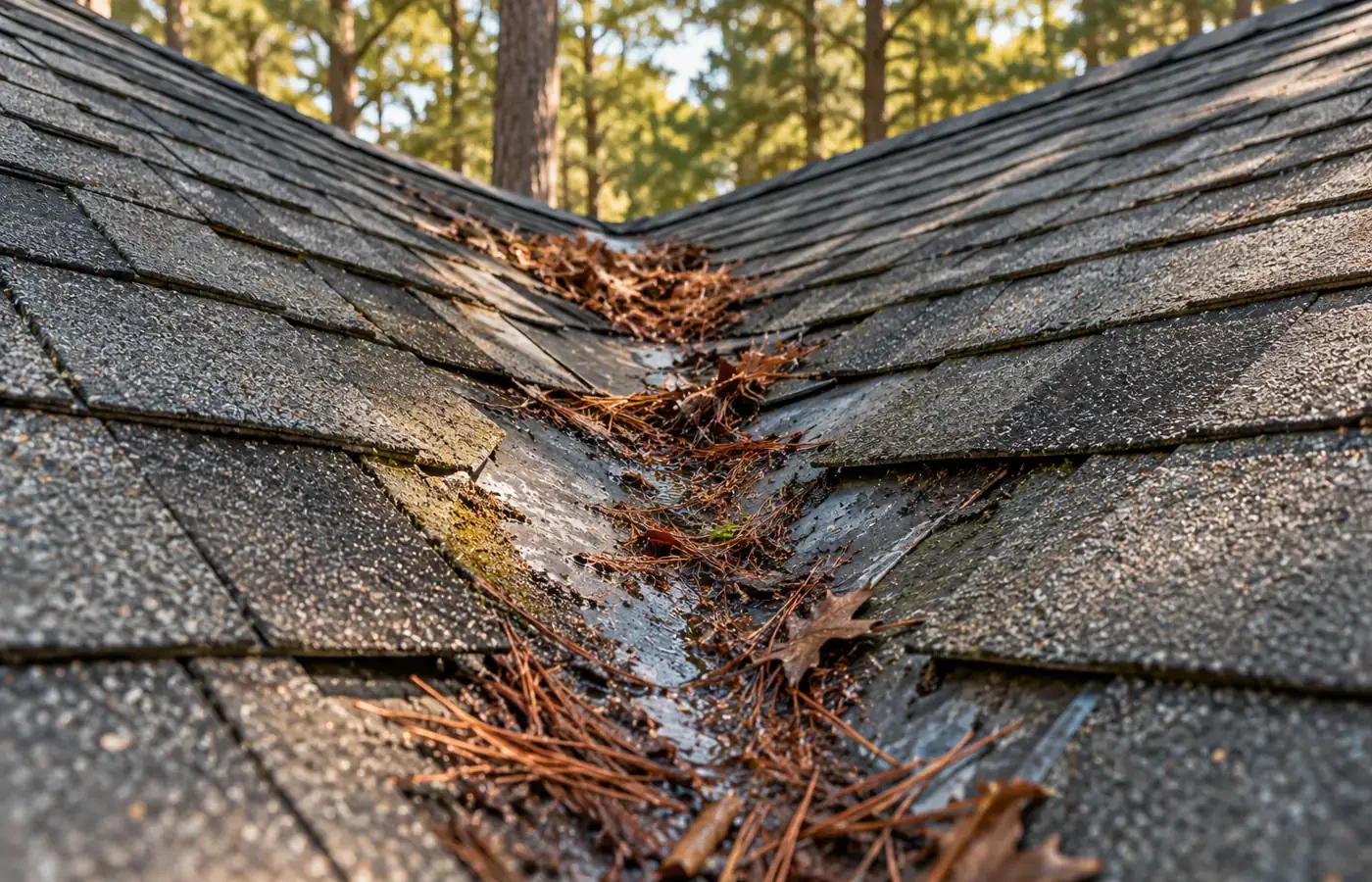
A roof valley is the V-shaped channel where two roof slopes meet. It carries the water from both slopes, so worn shingles, cracked valley metal or a pile of pine needles there leaks fast in heavy rain. We clear the valley, repair or replace the valley shingles and underlayment, and send you before and after photos.
Valleys work hard. A single valley on a ranch house can drain hundreds of square feet of roof in a storm. That is a lot of water racing through a narrow channel, and any weak spot shows up quickly as a stain on the ceiling below an inside corner of the house.
Signs your valley is leaking
- A stain on the ceiling under an inside corner where two roof slopes meet
- Leaks that start only during heavy rain or right after a storm
- A line of pine needles, leaves or granules packed in the valley
- Shingles in the valley that look worn, curled or cracked
- Rust or holes in exposed metal valley flashing
- Water spilling over the gutter at the bottom of the valley
Why valleys leak in Pine Bluff
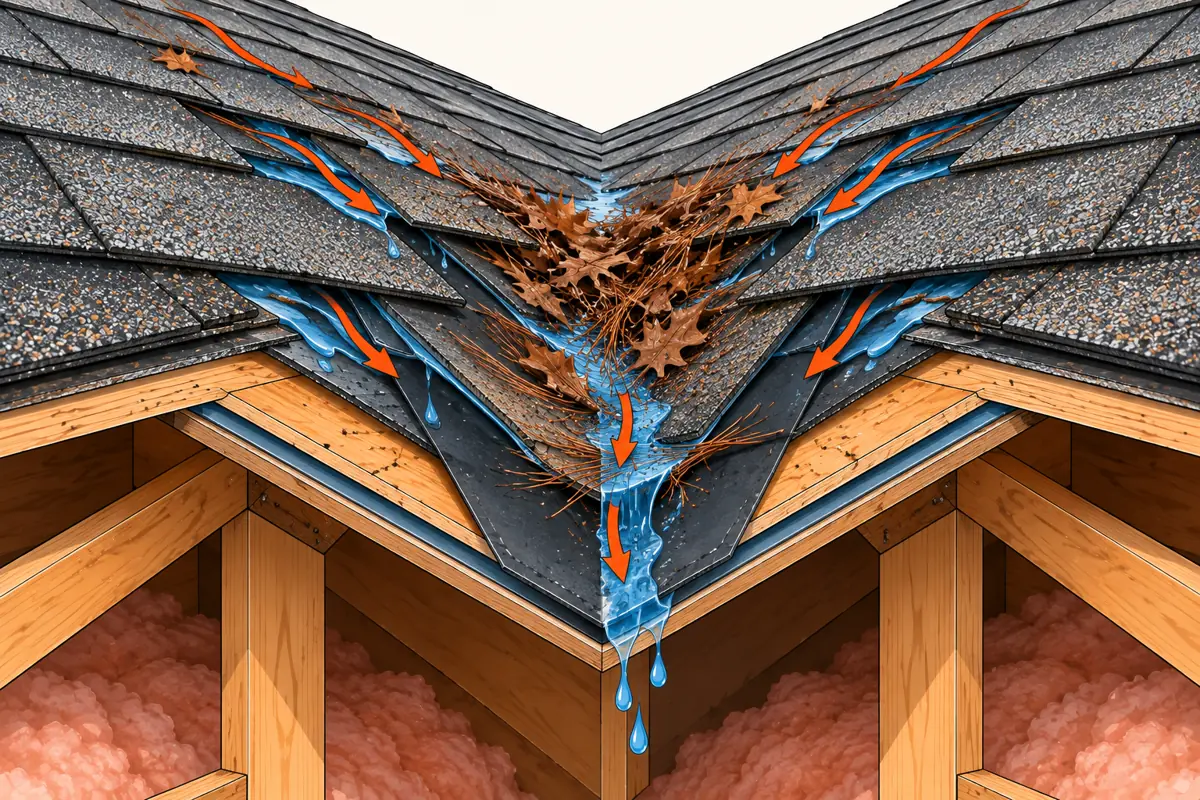
Pine Bluff has pines, and pines drop needles all year. Needles collect in valleys and form small dams. When a heavy rain comes, water that should run down the valley backs up behind the dam and gets pushed sideways under the shingle edges. From March through May the area averages over 5 inches of rain a month, so valleys get tested often.
The second cause is wear. Valleys carry more water and more grit than the rest of the roof, so the shingles there wear out first. On a 25 or 30 year old roof, the valley is often the first place to fail, while the rest of the roof still has life left.
The third is how it was built. Some valleys were installed without the waterproof underlayment that should go under them, or with shingles cut too close to the center line.
Types of valleys we repair
Closed-cut valleys
Shingles from one side run through the valley and shingles from the other side are cut in a straight line. Common on newer shingle roofs. We repair by replacing the valley shingles and the underlayment beneath them.
Woven valleys
Shingles from both sides overlap through the valley. They can crack at the fold on older roofs.
Open metal valleys
A strip of metal shows down the center. The metal can rust or split, and the shingle edges beside it can lift. We replace the metal or seal the edges depending on its condition.
How we repair a roof valley
Find it
Attic check first, then the roof. A water test if the spot is not obvious.
Price it
A written price for the exact repair. You approve it before we start.
Fix it
We repair the spot that leaks and check the area around it.
Prove it
Before and after photos go to your phone.
A proper valley repair means lifting the shingles on both sides, laying new ice and water shield underlayment down the valley, then shingling back in. A bead of tar down the middle is not a repair. If the decking under the valley is soft, we show you the photos before replacing it, since that is common when a valley has leaked slowly for a while. See roof decking repair.
Text Jacob a photo of the ceiling and the valley above it. Same-day response in Pine Bluff, and a written price before any work starts.
Roof valley repair cost in Pine Bluff
| Repair | Typical Central Arkansas range |
|---|---|
| Clear and reseal a section of valley (moderate repair) | $450 to $1,200 |
| Rebuild a full valley with new underlayment | Quoted on site, depends on length and pitch |
| Decking replacement under the valley | Shown in photos, then priced |
Ranges based on published Central Arkansas roofing cost guides (2025 and 2026). They are not quotes. Your written price comes after we look at your roof, and you approve it before any work starts.
Keep your valleys clear
The cheapest valley repair is the one you never need. If tall pines hang over your roof, have the valleys and gutters cleared at least once a year, ideally in late winter before the spring storms. Never pressure wash shingles to do it. That strips the granules and shortens the roof’s life. If limbs rub the roof, trim them back.
Valley leaks are common under the big trees around Lake Saracen and in older neighborhoods on the West End.
What you can check from the ground
Stand at the bottom of the valley and look up. Do you see a strip of needles and leaves packed down the middle? Is the gutter at the bottom overflowing in rain, or bent from water pouring over it? Are the shingles in the valley a different color or smoother than the rest of the roof? Any of those points to a valley problem. Inside, check the ceiling and the top of the walls under that inside corner. Photos of both help us plan the repair.
When a valley leak means more work
If the valley has leaked for a long time, the decking under it can be soft or rotted, and the rafters below can show water stains. We check that before and during the repair and show you photos of anything we find. If the rest of the roof is near the end of its life too, rebuilding one valley may only buy a few years, and we will say so, so you can plan ahead. Our guide on repair or replace a leaking roof helps you think it through.
Roof valley FAQ
Why does my valley leak only in hard rain?
In light rain the valley drains fine. In a downpour the water gets deep, backs up behind debris and pushes under the shingle edges. See why roofs leak only in heavy rain.
Can you repair just the valley and not the whole roof?
Yes. Valleys often wear out first. We rebuild the valley and tie it into the shingles on both sides.
Should valleys have metal in them?
Both metal and shingle valleys work when installed right. What matters is the waterproof underlayment under the valley and clean, straight shingle cuts.
How often should valleys be cleaned?
Under pine trees, at least once a year. Twice a year if needles pile up fast.
Will a valley repair match my roof?
We use shingles that match your roof as closely as possible. Older roofs may look slightly different until the new shingles weather.