
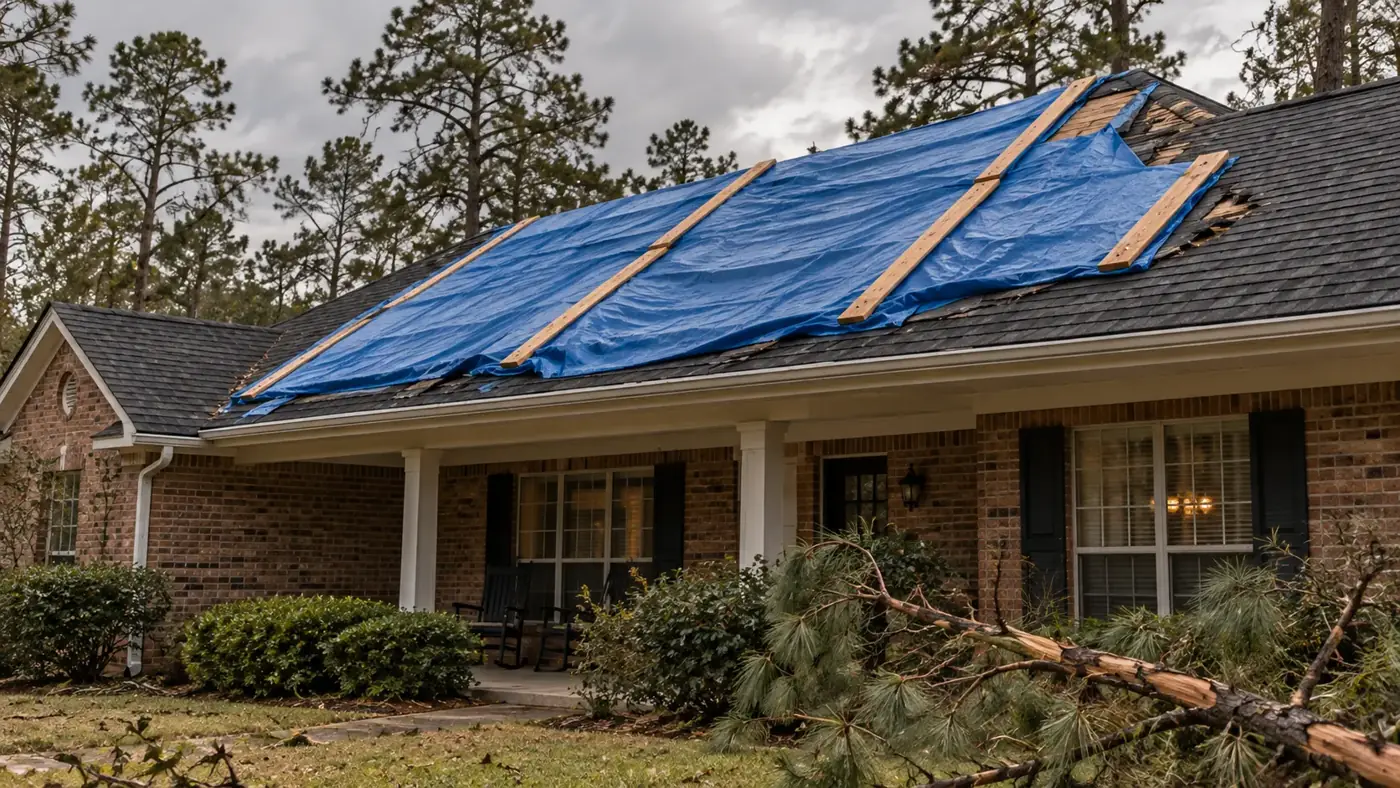
A roof tarp is meant to last only until the repair is made. A light blue poly tarp often breaks down in a few weeks to about 90 days in full sun, and heavier UV-resistant tarps last longer. In practice, plan to replace the tarp with a real repair within a few weeks. Tarps left on for months trap moisture, blow loose in storms and can damage shingles underneath.
What shortens a tarp’s life
| Factor | Effect |
|---|---|
| Sun (UV) | Makes cheap tarps brittle and cracked, often within weeks in summer |
| Wind | Lifts loose edges and tears grommets |
| How it is fastened | Tarps nailed through with no wood strips tear at the nails |
| Tarp weight | Heavier, UV-treated tarps outlast light ones |
| Debris | Leaves and limbs trap water and weigh it down |
How a proper tarp is installed
The tarp should run over the ridge to the other side, so water cannot run under the top edge. It is held with wood strips screwed or nailed along the edges, not with nails punched straight through the plastic. It should extend well past the damaged area. Sandbags alone do not hold in Arkansas wind. See emergency roof tarping.
Problems from leaving a tarp too long
- Trapped moisture can rot decking and shingles underneath
- Fastener holes can let in water once the tarp is removed if not sealed
- A torn, flapping tarp lets water in during the next storm
- Some insurers expect permanent repairs to be made in a reasonable time
Checking your tarp
After every storm, look at the tarp from the ground. Loose edges, tears, sagging pools of water and flapping all mean it needs attention. Do not climb on a wet roof to fix it yourself.
Waiting on insurance?
Claims after big storms can take weeks. A properly installed tarp usually holds through that, but it should be checked and replaced if it starts to fail. Keep receipts for the tarp and any re-tarp, since those are often covered as part of preventing further damage. See hail damage claim steps in Arkansas.
What does the FEMA blue roof program do?
After some major declared disasters, FEMA and the U.S. Army Corps of Engineers run an Operation Blue Roof program that installs free temporary covers on eligible homes. Those are meant to last about 30 days, until permanent repairs can be made. It is only active after certain disasters, so check FEMA’s current notices after a big storm.
Tarp cost
See emergency roof tarp cost. In most cases, when we tarp a roof, we plan the permanent repair on the first dry day, often within a few days, so the tarp does not have to hold long.
What size tarp do I need?
Bigger than you think. Measure the damaged area, then add several feet on each side, plus enough to run over the ridge and down the other side a few feet. Most homes need at least a 12 by 16 foot tarp for even a small area. Heavier tarps, often silver or brown, hold up to sun and wind better than thin blue ones.
How long does a blue tarp last on a roof?
Often a few weeks to about 90 days in full sun. Heavier UV-treated tarps last longer.
Can a tarp damage my roof?
If left too long or nailed wrong, it can trap moisture and leave holes. Short-term use done right is fine.
Should I remove a tarp before a roofer comes?
No. Leave it until the roofer is ready to repair the area.
Can I tarp my roof myself?
Only on a low, dry roof when you are comfortable on a ladder. Never in rain or wind.