
Yes. A ceiling can collapse when water from a roof leak soaks the drywall and pools on top of it. Drywall loses strength when wet, and water is heavy: each gallon weighs about 8.3 pounds. Warning signs are a bulge or sag, soft spots, cracks spreading from the wet area, and water dripping from several places. Keep people out of the room and drain the bulge.
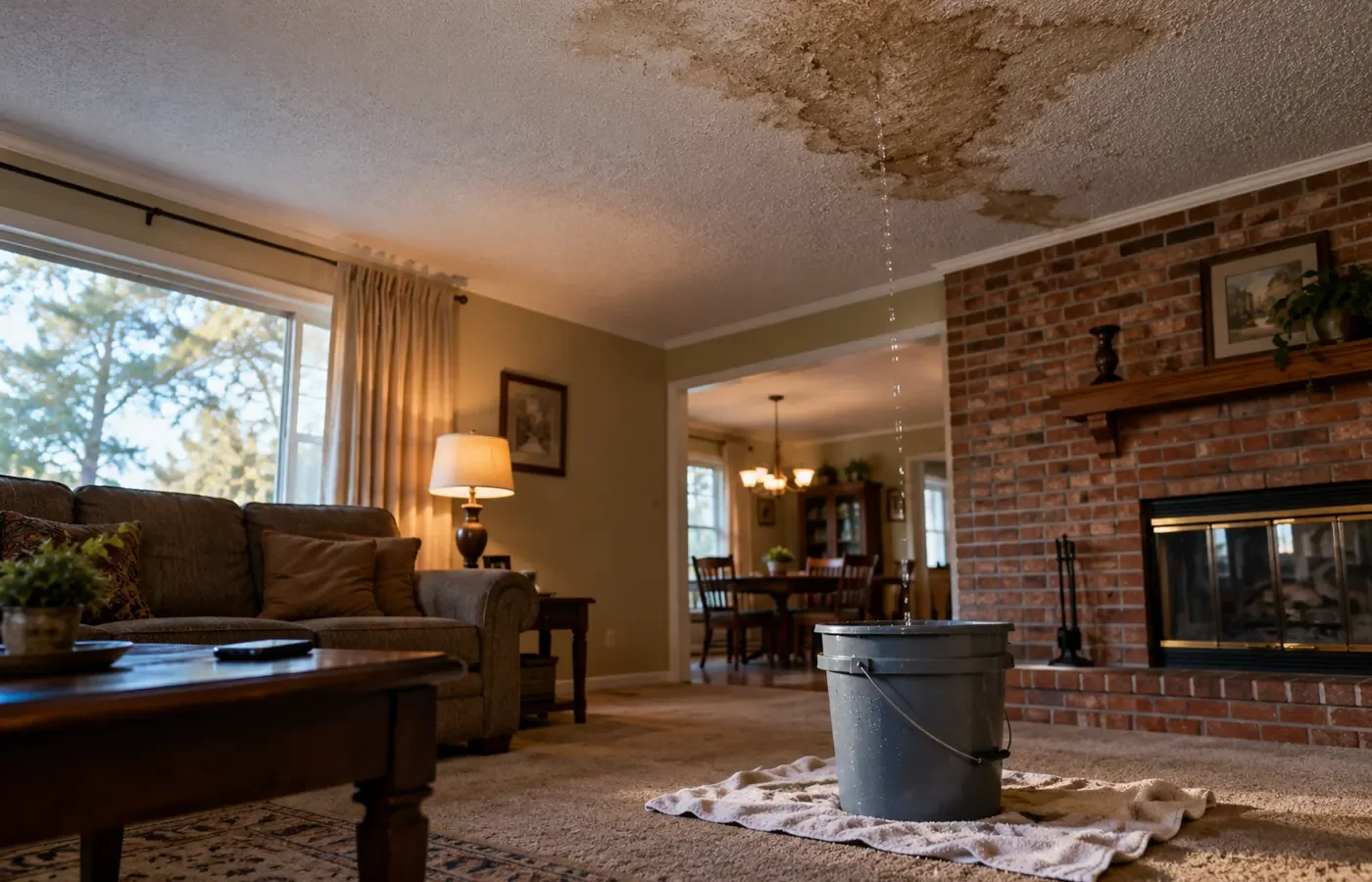
Warning signs
- A bulge or bubble in the ceiling
- The ceiling sags or feels soft when pressed gently with a broom handle
- Cracks spreading out from the stain
- Water dripping from more than one spot
- Popped nail or screw heads around the wet area
- Creaking or crackling sounds
How to drain a bulging ceiling safely
Clear the room
Move people, pets and valuables out of the way.
Turn off power
Shut off breakers for lights or fans in that ceiling.
Set up
Put a large bucket or trash can under the lowest point of the bulge, with a tarp around it.
Make a small hole
Stand to the side and use a screwdriver to poke a small hole at the lowest point. The water drains into the bucket.
Keep watch
Empty the bucket as it fills and stay out from under the wet area.
Why ceilings fall
Drywall is made of gypsum and paper. When it soaks up water, it softens and the screws can pull through. Water collecting on top from a roof leak adds weight fast. Older homes with plaster ceilings, common in Pine Bluff houses built before the 1950s, can fail in large, heavy pieces. Popcorn ceilings in homes from before about 1980 may contain asbestos, so do not scrape or sand them without testing.
What happens after
Once the roof is fixed, wet insulation above the ceiling should be removed, and the area dried. Drywall that sagged, softened or grew mold is cut out and replaced. Drywall that only stained and stayed firm can often be dried, sealed with stain-block primer and painted. See roof water damage repair.
Stop the source
Draining the ceiling only buys time. The next rain fills it again. Tarp or repair the roof as soon as possible. See emergency roof leak repair and is a roof leak an emergency.
How much water can a ceiling hold?
There is no safe number. It depends on the ceiling material, how it was fastened and how long it has been wet. A bulge the size of a dinner plate can hold several gallons. Treat any bulge as a reason to act now rather than a reason to wait and see.
Is a collapsed ceiling covered by insurance?
If the leak came from sudden storm damage, the ceiling repair is often part of the claim. If it came from a slow leak that went on for a long time, coverage is less likely. Photos and dates matter. See does insurance cover roof leaks.
Does the room below need to stay empty?
Until the ceiling is drained and checked, yes. Keep beds, cribs and chairs out from under the wet area. Once the water is out and the drywall has been checked for soft spots, the room is usually fine to use again.
How do I know if my ceiling is about to collapse?
Sagging, bulging, soft spots, spreading cracks and dripping from several places are the main signs.
Is it safe to sleep in a room with a leaking ceiling?
Not if the ceiling is sagging or bulging. Sleep elsewhere until it is drained and checked.
Can I just let the water dry in the ceiling?
If the drywall stays firm and the leak is fixed, it may dry. If it sags, it needs replacing.
Can a stained ceiling be repaired without replacing it?
Yes, if it stayed firm. Dry it, use stain-block primer, then paint.